Water-Ballasted Turf Rollers · Makhanda, RSA
One roller.
Two weights.
Every pitch.
Cricket pitch rollers and bowling green polishers built to order in Makhanda since 1991. Add water to the drums and the same machine goes from a light pre-season roller to a heavy in-season one — no second machine required.
Double Drum Ride-On Roller — drum ballast fills from empty to full with water, no tools required.
What Makes Protea Unique
- Adjustable weight — one machine covers pre-season and in-season work.
- Simple, easily maintained hydraulic system.
- Manufactured, painted and branded to order.
- Spring seat and canopy for operator comfort.
- Straightforward, one-person operation.
Why Ballast
Two rollers, in one machine
The weight of both cricket pitch rollers is adjusted by adding or draining water from the drums — no kit changes, no second machine.
As a pitch firms up through the season, the roller firms up with it: light and manoeuvrable for early, soft ground; heavy for a firm, in-season surface that needs real compaction. One machine covers both jobs, ballasted to the specific ground it's working on that day.
That's only half the story. How the weight reaches the ground matters as much as how much of it there is.
Why drum diameter matters
A small wheel — like the ones on a converted tarmac roller — meets the ground at a steep angle, so part of its force pushes sideways as well as down. A large-diameter drum meets the ground almost flat, so nearly all of that force goes straight down. Protea's 800 mm drums are sized to compact the pitch without shearing or rippling the surface.
As roller diameter increases, the contact angle between drum and pitch decreases — and the compaction force becomes more vertical. Diagram drawn to a common scale; angles illustrative.
The Range
Three machines, one workshop
Double Drum Ride-On Roller
The flagship machine: hydraulic drive, hydraulic power steering and a canopy over a one-person operator seat. Articulated at the front roller for tight, even coverage across a full square.
Single Drum Walk-Behind Roller
A lighter, more affordable alternative, developed for smaller grounds and schools. Demonstrated to Cricket South Africa in 2019 and extensively tested since.
Bowling Green Polisher
Irons up to three greens an hour. Petrol-driven and hydrostatically driven, supplied with its own transport trolley to move between greens.
Specification Highlights
Engineering, in numbers
Since 1991
Proven on the biggest grounds
Sanctions had cut South African turf equipment off from overseas manufacturers. Engineers in Grahamstown, Eastern Cape, set out to build the country's first locally-manufactured cricket pitch roller.
The first roller was commissioned in early 1992. That October, Les Burdett — the groundsman brought to South Africa by the SA Cricket Board — inspected the machine in Grahamstown.
The roller prepared the Buffalo Park pitch for the India v South Africa One Day International. The Daily Dispatch ran a colour photograph of it at work.
“To achieve maximum compaction and bounce, a heavy roller of no less than two ton must be used together with correct preparation techniques.”
Les Burdett — SA Cricket Board groundsman, Oct 1992“The pitch for the Buffalo Park encounter was one of the best produced for the entire night series.”
Owen Smith — Cape Times, 22 Dec 1992Supplied to
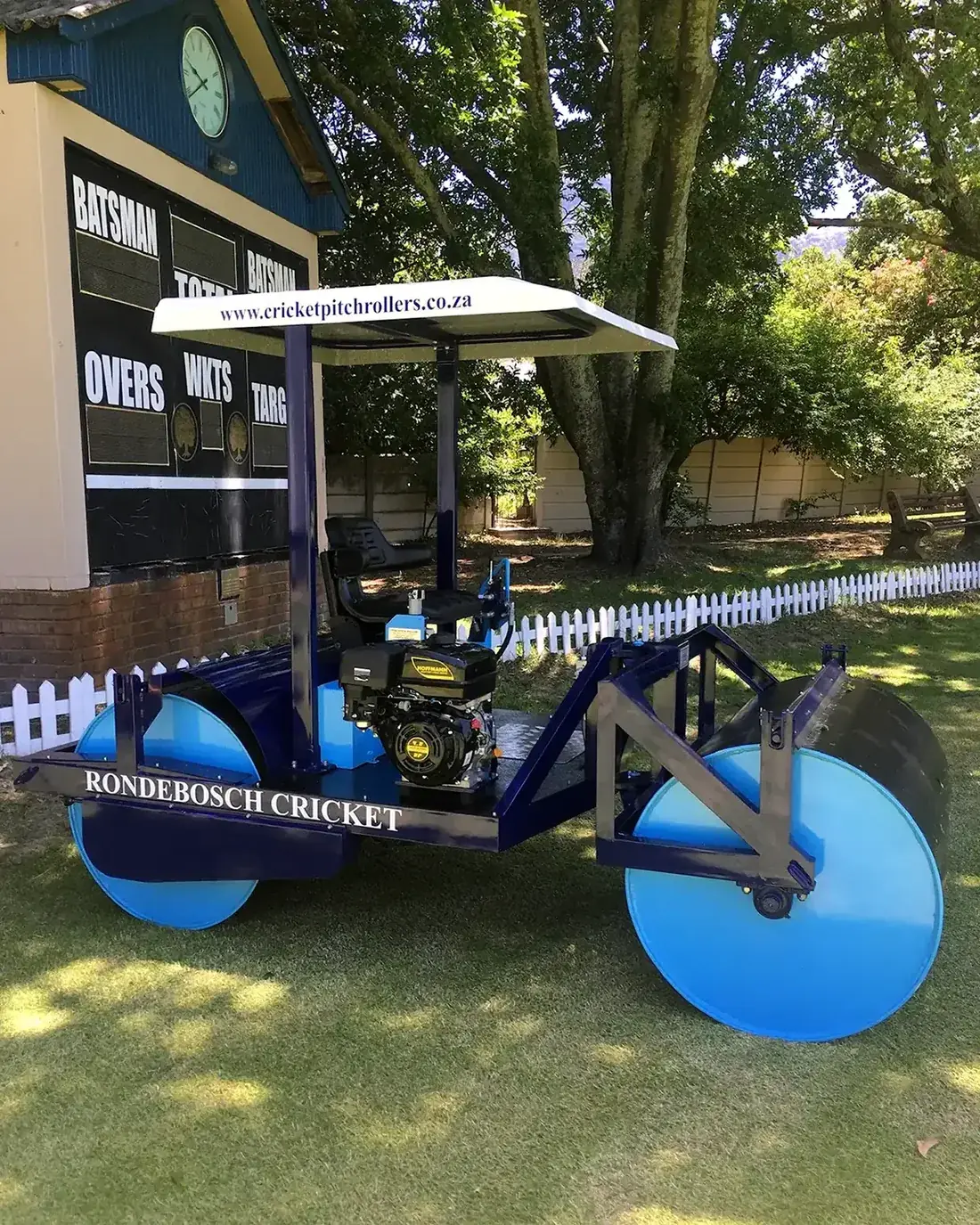
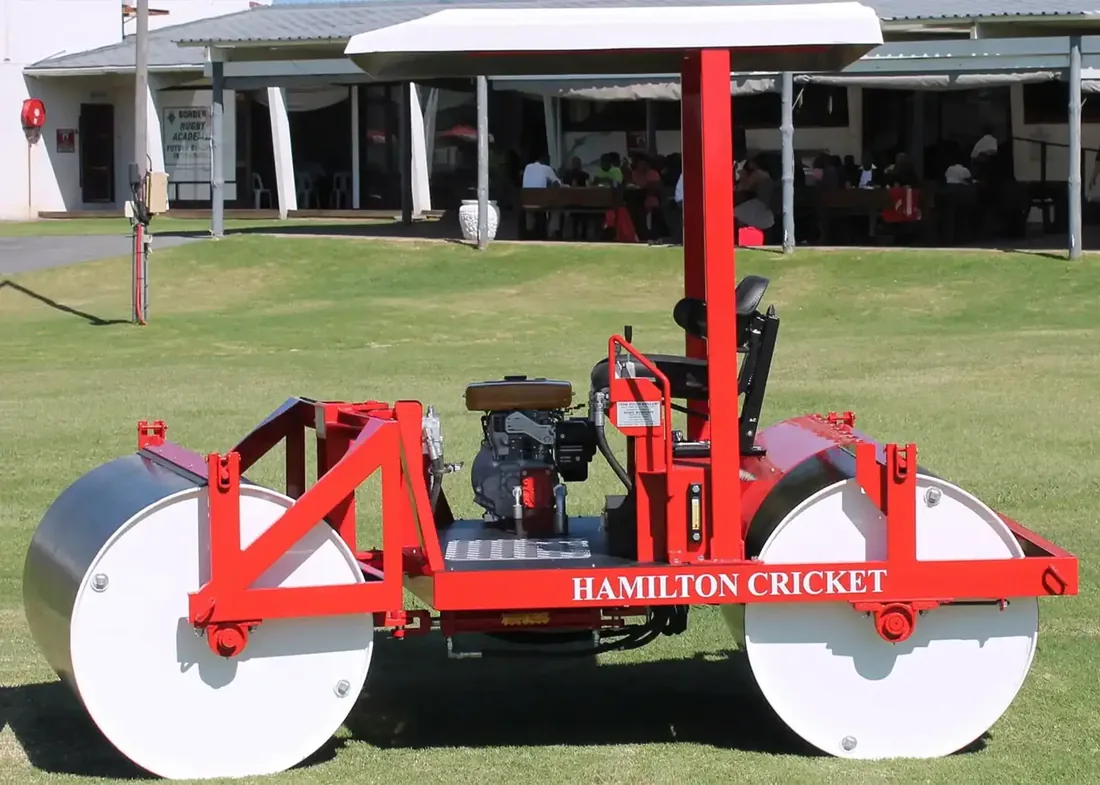
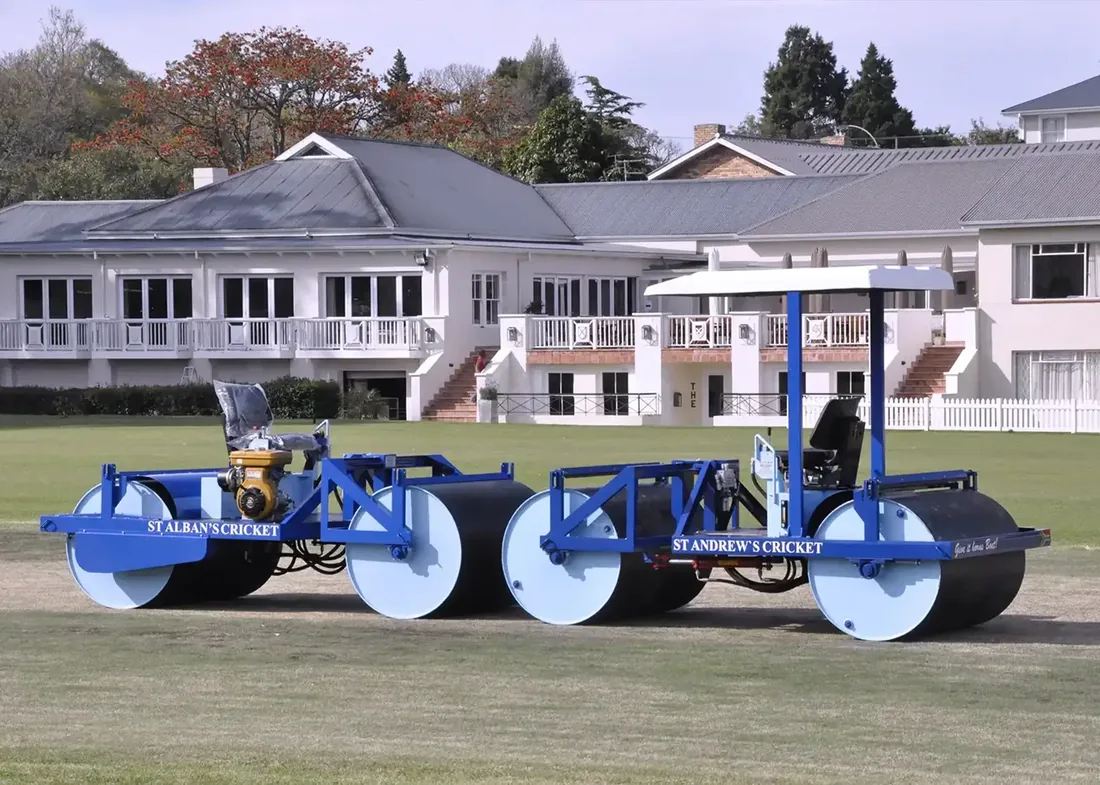
A Common Question
Why not a tarmac roller?
Ex-road rollers look like good value — the upfront cost is lower than a dedicated pitch roller. The differences show up afterwards.
Ex-Road / Tarmac Rollers
- —Hydraulic wheel motors built into the centre of the drum — complex, specialist, and expensive to repair.
- —Small drums meet the ground at an angle, pushing force sideways as well as down, which damages the pitch over time.
- —No ballast adjustment — one fixed weight regardless of ground or season.
- —Compaction relies on one axle instead of a shared tandem load, and can slip and mark the pitch.
- —High-pressure hydraulic pipes need replacing roughly every two years; a burst pipe means oil on the wicket.
- —Square-edged rolls that can ridge soft, early-season ground.
Protea Pitch Rollers
- +A straightforward hydraulic pump and motor — fewer specialist parts, lower long-term running costs.
- +Large-diameter, 800 mm drums direct force vertically, compacting without shifting the surface.
- +Water ballast lets you tune the machine's weight to the ground and the stage of the season.
- +Tandem roller configuration shares weight evenly across both drums.
- +Standard hydraulic maintenance — no high-pressure pipe replacement cycle.
- +Roll profile designed against ridging, even on soft ground.
Find Your Machine
What are you maintaining?
Get In Touch
Let's talk about
your surface.
Rollers are manufactured to order and painted and branded to your specification. Tell us about your ground and we'll recommend the right machine and ballast range.